All Categories
Featured
Controlling Workplace Wellness Program Expenses in 2026
Complete 2026 Small Business Insurance Coverage Assessment
Browsing Medical Facility Stays with Long Beach Indemnity...

Essential Small Business Medical Coverage Trends
Table of Contents
Understanding the latest worker advantages patterns can help companies prepare ahead and offer an advantages bundle that fulfills the progressing requirements of employees. Here are 5 trends forming advantages in 2026: Surveys job that healthcare expenses are likely to increase by 6.5% to, in most cases, as much as over 10% in 2026.
A RAND report exposed that 12% of Americans have actually used GLP-1 medications for weight reduction, and 14% are interested in using the drugs. Furthermore, the number of prescriptions for the drugs has more than tripled considering that 2020. The OBBBA, a sweeping tax and costs bill, consists of a broad set of modifications for staff member benefit plans, the majority of which take effect in 2026.
Food and Drug Administration in 2025 are specialty drugs, and the momentum will continue throughout 2026. Biologics, biosimilars, and cell and gene treatments are fueling this fast development. New federal efforts intend to make in vitro fertilization more affordable. Many states require that insurer cover infertility diagnosis and treatment.
As the workforce's needs continue to evolve, so should the advantages that business offer to remain pertinent and significant to employees. Every workplace is special, but companies can keep track of and comprehend the most recent advantages trends to much better attract and maintain top talent while taking full advantage of expenses. Contact us today to get more information.
Future-Proofing Small Business Group Insurance for 2026
2026 holds significant changes to health care and the worker benefits landscape. To help you navigate these updates, we've highlighted four essential healthcare trends to keep on your radar for 2026 and beyond.
Formerly, people who enrolled in a High-Deductible Health Insurance (HDHP) with a Health Cost Savings Account (HSA) needed to meet their deductible before receiving these services in order remain HSA eligible. Effective January 1, 2026, individuals are permitted to pay for qualified Direct Medical care (DPC) memberships with HSA funds without losing their tax-advantaged HSA involvement, provided the DPC regular monthly fees are below $150/individual or $300/family.
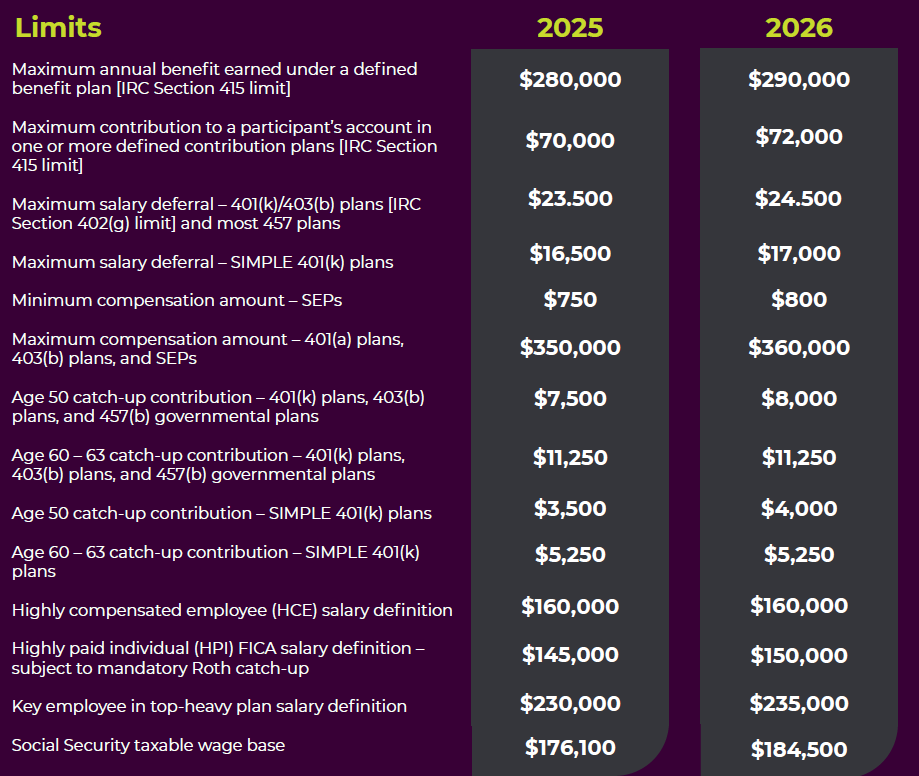
For the very first time in decades, the Dependent Care FSA optimum contribution is seeing a boost. Effective January 1, 2026, the Dependent Care FSA limit will increase to $7,500, and $3,750 for married couples submitting separately. This dive from the decades-old $5,000 contribution limit is welcome news for numerous working families.
Please check with your company or HR department to verify whether the new maximum is permitted. Professionals anticipate a shift in focus towards individualized advantages in 2026 that focus on total wellness for people that favorably impacts psychological, monetary and physical health.
A Lifestyle Repayment Account likewise referred to as a Lifestyle Costs Account permits companies to curate a wellness strategy that reimburses particular expenditures to assist workers achieve and keep wellness goals, whether it's traditional health and wellness objectives, or items that concentrate on mental, emotional and financial health. To offer you a concept of the innovative possibilities of these plans, check out real case circumstances and strategy designs.
Securing Small Business Health Insurance for 2026
In 2026, employees anticipate more than conventional protection. Here are the leading 10 worker benefits patterns specifying 2026, and what they indicate for your company.
Business Insurance Long BeachEmployers are building customizable advantage bundles that adjust to staff members' distinct life phases, family circumstances, and monetary goals. Utilizing information insights, organizations can customize offerings for different employee sections, making advantages more pertinent, valuable, and engaging.
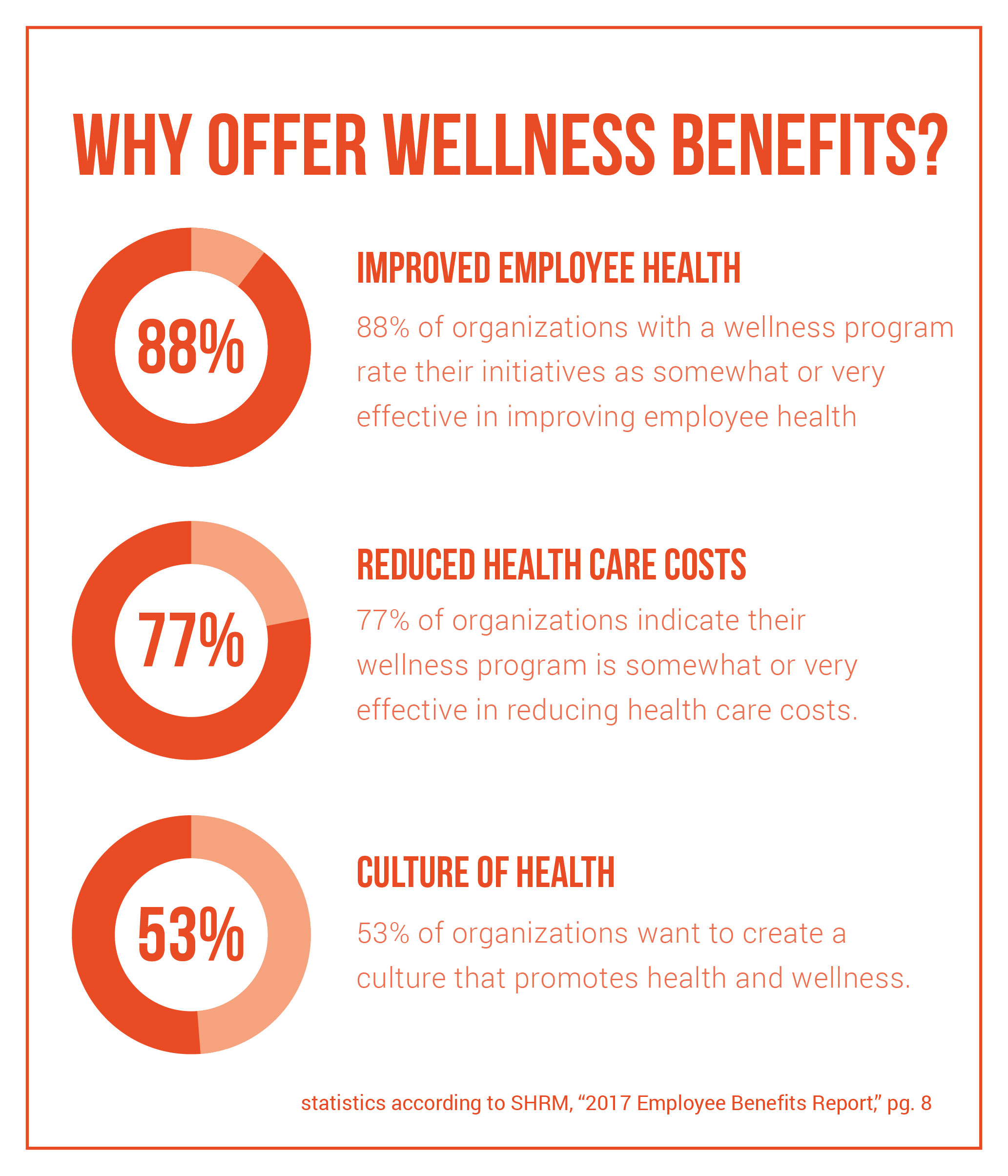
From psychological health tools and virtual therapy to monetary coaching and health rewards, business are helping workers flourish in every location of life. Financial tension is among the greatest drivers of burnout and disengagement. That's why monetary health is now a foundational benefit. Employers are offering monetary education, budgeting tools, and individually training, while making it simpler for staff members to comprehend and use health savings accounts (HSAs), and flexible costs accounts (FSAs).
Companies are using AI to advise customized advantages, automate routine jobs, and deliver more user-friendly experiences. Organizations are incentivizing screenings, wellness sees, and early health interventions to support long-lasting results.

Latest Posts
Controlling Workplace Wellness Program Expenses in 2026
Maximizing Employee Retention via Robust Benefits

Complete 2026 Small Business Insurance Coverage Assessment