All Categories
Featured
Controlling Workplace Wellness Program Expenses in 2026
Complete 2026 Small Business Insurance Coverage Assessment
Browsing Medical Facility Stays with Long Beach Indemnity...

Complete 2026 Small Business Insurance Coverage Assessment
Table of Contents
Most employers pay $3$5 per worker each month for a digital staff member wellness program in 2026. Basic platforms with obstacles and content start near $3/user/month. Full-service programs with coaching and health evaluations start near $58, so the complete market variety runs $3$100 per worker each month depending upon depth. A 200-person company spending plans approximately $5,000/ year, with volume discount rates usually kicking in above 500 employees.
How much do business health cares expense usually? The response depends upon 3 factors: your company size, the scope of services you require, and whether you pick a digital-first platform or a full-service provider. Here is what many organizations can expect to budget plan: Basic Digital$3 $5per employee/ month$36 $60 annuallyHealth evaluations, health website, obstacles, academic contentMid-Range$12 $58per employee/ month$150 $700 annuallyAll basic functions plus reward programs, group training, analyticsComprehensive$58 $100+per worker/ month$700 $1,200+ annuallyFull suite: 1:1 coaching, biometrics, mental health, reporting, customized content Rates designs differ by supplier.
Others use a per-active-user design where you just pay for workers who in fact engage. A few use tiered pricing based upon company size, where larger organizations get lower per-employee rates. For small companies with fewer than 100 employees, anticipate to pay at the higher end of per-employee rates because you do not have the volume discount that larger organizations work out.
Live, 1:1 health coaching is the most pricey element, normally including $20-$50/employee/month On-site or lab-based screenings add $50-$150 per employee per occasion Present cards, premium decreases, or HSA contributions can add $100-$500/employee/year Branded courses, challenges, and interactions add advancement costs Linking to your HRIS, advantages platforms, or claims information requires technical workFree Resource Lots of shown, no-budget wellness methods your group can launch this week.
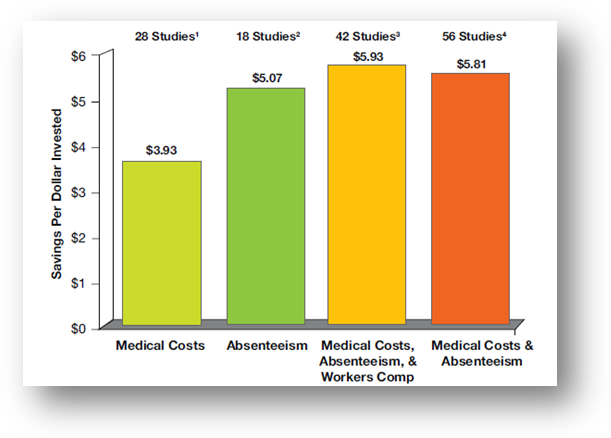
Are staff member health care worth the financial investment? The research study states yes, however with an important caveat: program design matters more than program costs.$3.27 medical cost savings per $1 spentSource: Harvard Meta-Analysis$2.73 absenteeism cost savings per $1 spentSource: Harvard Meta-Analysis6:1 total return on investmentCombined medical + absence A Harvard meta-analysis estimated that for every single $1 invested in health care, medical expenses fall by roughly $3.27 and absenteeism costs by about $2.73.
Business Insurance Rancho CucamongaEstimating for 2026 Workplace Wellness Initiative Costs
employer discovered more modest results, highlighting that program quality and style are the genuine drivers of efficiency. ROI does not occur since a company tosses money at a program. It is a spin-off of an agile wellness offering that evolves in time, keeps workers engaged, and is actively supported by management.
The sticker label price is only part of the staff member wellness program cost. A $5/employee program with 10% involvement successfully costs $50 per active user.
Generic programs stop working since they do not meet workers where they are. The most effective programs utilize behavioral science to customize the experience.
Selecting the wrong vendor indicates 6-12 months of sunk application time, lost worker trust, and the cost of starting over. The most affordable program is seldom the most cost-effective. A $3/employee platform with 40% engagement provides more worth than a $1/employee platform nobody utilizes. The most cost-efficient health options share these characteristics.
Essential Small Business Insurance Changes Effective 2026
Search for platforms that utilize behavioral science to tailor content to each worker's stage of change. Mobile app, e-mail, text, and wearable integration to satisfy workers anywhere they are. Allows prompt changes and clear presence into involvement, outcomes, and program ROI. Programs grounded in cognitive behavioral training, not just gamification, produce enduring results.
Grows with your company so you are not paying too much at 50 employees or underpowered at 500. Choosing the ideal wellness partner is not just about the most affordable staff member health program expense.
Do they have published research study or third-party recognition of health results? Can they give you a clear per-employee expense with no covert costs for implementation, reporting, or material? How lots of programs, courses, and obstacles are consisted of?

Latest Posts
Controlling Workplace Wellness Program Expenses in 2026
Maximizing Employee Retention via Robust Benefits
Complete 2026 Small Business Insurance Coverage Assessment