All Categories
Featured


Your Complete Guide of 2026 Employee Assistance EAP
Table of Contents
Many employers pay $3$5 per worker per month for a digital staff member wellness program in 2026. Full-service programs with coaching and health evaluations begin near $58, so the complete market variety runs $3$100 per worker per month depending on depth.
Just how much do corporate health cares cost on average? The answer depends upon three factors: your business size, the scope of services you require, and whether you select a digital-first platform or a full-service service provider. Here is what most companies can anticipate to budget plan: Basic Digital$3 $5per employee/ month$36 $60 annuallyHealth assessments, health website, challenges, instructional contentMid-Range$12 $58per employee/ month$150 $700 annuallyAll basic features plus reward programs, group coaching, analyticsComprehensive$58 $100+per worker/ month$700 $1,200+ annuallyFull suite: 1:1 coaching, biometrics, psychological health, reporting, custom-made content Prices models differ by vendor.
Others use a per-active-user model where you just spend for workers who in fact engage. A couple of usage tiered rates based upon company size, where larger companies get lower per-employee rates. For small organizations with less than 100 staff members, expect to pay at the higher end of per-employee rates because you lack the volume discount rate that larger organizations work out.
Live, 1:1 health coaching is the most expensive element, usually including $20-$50/employee/month On-site or lab-based screenings include $50-$150 per employee per event Present cards, premium reductions, or HSA contributions can include $100-$500/employee/year Branded courses, challenges, and interactions include development costs Linking to your HRIS, advantages platforms, or claims information needs technical workFree Resource Lots of shown, no-budget wellness techniques your team can introduce today.
Group Benefits EscondidoAre staff member health programs worth the financial investment? The research states yes, but with an important caution: program design matters more than program costs.$3.27 medical expense savings per $1 spentSource: Harvard Meta-Analysis$2.73 absenteeism cost savings per $1 spentSource: Harvard Meta-Analysis6:1 overall return on investmentCombined medical + absence A Harvard meta-analysis estimated that for each $1 spent on health care, medical expenses fall by approximately $3.27 and absenteeism expenses by about $2.73.
Group Benefits Escondido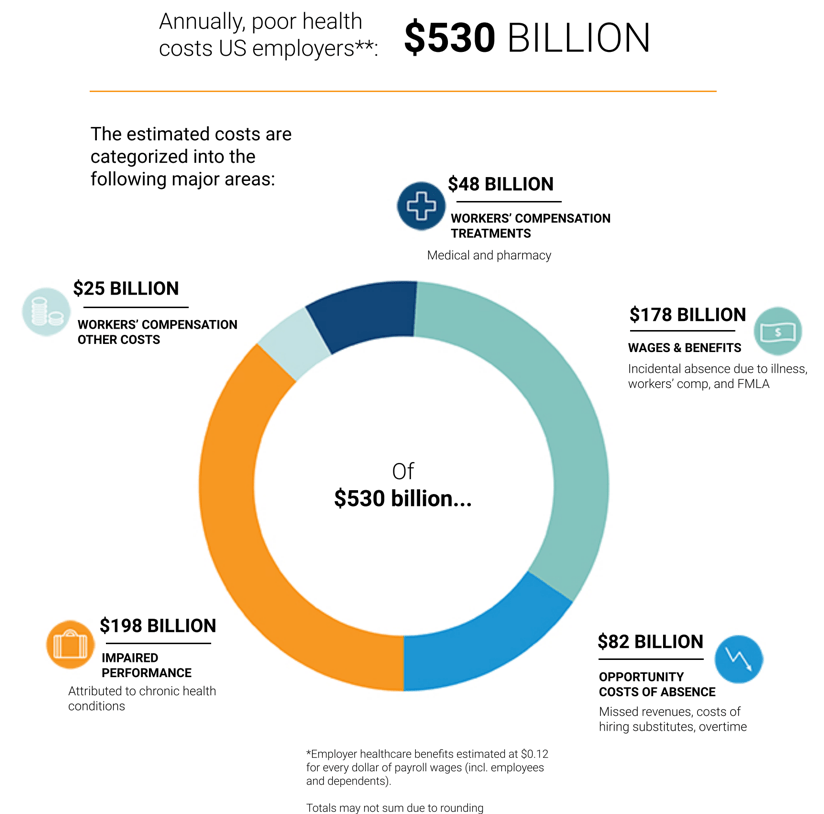
Essential Small Health Insurance Changes Effective 2026
employer found more modest outcomes, highlighting that program quality and style are the genuine motorists of efficiency. ROI does not take place because a business throws money at a program. It is a by-product of an agile health offering that evolves gradually, keeps workers engaged, and is actively supported by management.
The sticker label price is just part of the employee wellness program expense. These are the concealed costs that silently erode your budget and ROI: If only 10-15% of employees engage, your per-participant cost escalates. A $5/employee program with 10% participation effectively costs $50 per active user. Customization and evidence-based engagement strategies are the fix.
Generic programs stop working due to the fact that they do not fulfill employees where they are. The most efficient programs utilize behavioral science to personalize the experience.
Picking the incorrect supplier means 6-12 months of sunk implementation time, lost employee trust, and the expense of starting over. The least expensive program is seldom the most cost-effective. A $3/employee platform with 40% engagement provides more worth than a $1/employee platform no one utilizes. The most economical wellness solutions share these characteristics.
Best Employee Dental & Vision Coverage Options
Enables timely changes and clear visibility into involvement, results, and program ROI. Programs grounded in cognitive behavioral training, not just gamification, produce enduring outcomes.
Grows with your company so you are not overpaying at 50 employees or underpowered at 500. Selecting the ideal health partner is not just about the lowest employee wellness program cost.
Do they have published research or third-party validation of health outcomes? Can they give you a clear per-employee expense with no concealed costs for execution, reporting, or content? How many programs, courses, and obstacles are included?

Latest Posts
Innovative Employee Wellness Initiatives in 2026

Reviewing Top Vision Insurance Plans

Navigating 2026 Employee Benefit Strategies